


Arcade Live
2.7155.00 Reviews
App Specs
- Version
- 2.3.37
- Updated On
- License
- Free
- Downloads
- 50,000+
- Developer
- Sprocket's Fun Factory, LLC
- Categories
- Arcade
- Platform
- Android
Screenshots




 Analysis by AppCompare
I approached Arcade Live expecting something closer to a conventional mobile arcade game, but its appeal comes from a different idea: it lets me interact with live-action remote-played claw machines and coin pushers through my phone. That makes the experience feel more like taking a turn at a physical arcade cabinet than controlling a fully digital game. It is an unusual concept, and that novelty is the main reason I can see people trying it.
At the same time, this is not an automatic recommendation for everyone. The game sits in a category where quick entertainment, timing, and repeat attempts matter, yet its real-world machine format brings more uncertainty than a normal arcade title. My experience is that it works best when I treat it as a short, casual diversion rather than as a dependable way to win prizes or replace a visit to an arcade.
How the remote arcade experience works
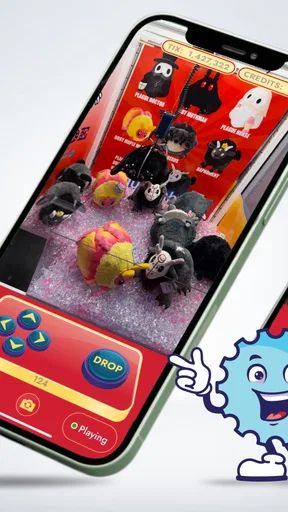
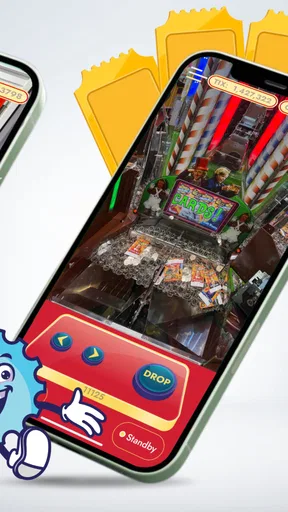
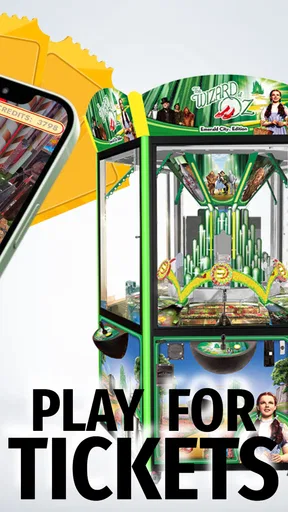
Arcade Live is an arcade game from Sprocket's Fun Factory, LLC. Its central attraction is the ability to play physical-looking claw machines and coin pushers remotely rather than simply watching a simulated animation. That distinction changes how I think about each turn. I am not only learning a virtual level or chasing a score; I am trying to make a useful decision with limited control over a machine-style outcome.
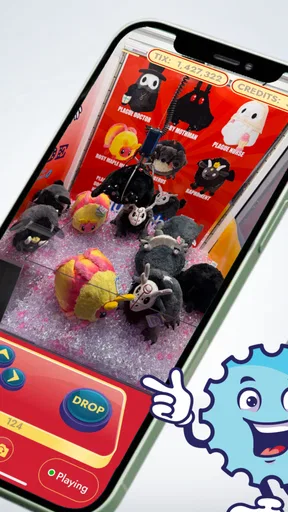
The claw-machine format naturally rewards patience. A rushed tap is easy to regret because positioning matters more than speed. I found it more useful to watch the machine carefully, decide what target is realistically reachable, and then commit instead of repeatedly making impulsive attempts. This is one of the first practical lessons the game encourages: the most exciting object on screen is not always the smartest target.
The coin-pusher side has a different rhythm. Rather than focusing on a single grab, I pay attention to the arrangement and timing of the moving coins. The attraction is in judging whether a push is likely to improve the board or simply disappear without meaningful progress. That gives this mode a more measured feel than a typical tap-heavy arcade game.
The important distinction is that Arcade Live is built around remote interaction with arcade-style machines, not a standard collection of offline levels. If you want a game that works like a traditional platformer, endless runner, or score-chasing cabinet, this may feel unfamiliar. If you enjoy the tension of a claw machine but prefer using a phone, the concept is much easier to appreciate.
What the free entry means in practice
The game is free to download, which makes trying the basic experience straightforward. I do not have to commit money before finding out whether remote arcade play suits me. That is valuable here because the concept is more specialized than the average arcade title. A free starting point gives curious players a chance to understand the controls, pacing, and overall appeal before deciding whether to continue.
Worth Reading Before You Choose

Flipboard Shows What News Apps Must Do Beyond the Feed

Switching to Android Auto Means Rethinking Your Driving Routine

Google Calendar Makes a Crowded Week Easier to Manage

Ludo King Makes the Most of the Minutes Between Plans

Baby Panda World Brings Quick Play to Modern Phones, but Its Game Library Feels Busy

ESPN’s Live Game View Makes Following Close Games Easier
There are in-app purchases listed from $9.99 to $99.99 per item. I would therefore separate “free to try” from “free as a complete long-term experience.” The first phrase is supported by the listed price; the second would be too strong. Anyone considering purchases should decide in advance how much the experience is worth to them, especially because the excitement of a near-success can make another attempt feel more urgent than it really is.
I prefer to evaluate the purchase side as entertainment spending rather than as a guaranteed bargain. A paid attempt may feel worthwhile when I am enjoying the remote-machine novelty, but it should not be treated like buying a conventional game with a fixed amount of content. The value depends heavily on how much I enjoy the process of choosing targets, watching outcomes, and trying again.
That distinction also answers a practical question many players will have: can someone use it without immediately paying? Yes, the game is listed as free, so a cautious player can begin without buying it. Whether the free experience is enough for a particular person depends on how long they remain interested, but there is no need to make the purchase decision before seeing whether the basic idea clicks.
Where the entertainment value comes from
For me, the strongest value is the change in atmosphere compared with a purely digital arcade game. A normal mobile claw-machine game can reproduce the look of a cabinet, but remote play aims to preserve the feeling that a real machine is responding to my decision. Even when the action is brief, that connection gives each turn a little more suspense than a predictable animation.
This makes the game particularly suitable for short breaks. I can imagine opening it while waiting for a friend, taking a few turns during a quiet commute when it is safe and practical to use a phone, or sharing the decision with someone nearby. One person can suggest a target while the other controls the turn, which gives the experience a small social element without requiring a full multiplayer session.
It can also appeal to players who like observational games. The best approach is not always to act immediately. I get more from the claw mode when I study the placement of objects and think about whether a grab has a realistic chance. With the coin pusher, I pay attention to movement and potential payoff rather than treating every press as equally useful. These habits make the game feel less random from the player’s side, even though the outcome is never fully under my control.
A less obvious benefit is that it exposes the difference between excitement and value. A dramatic near-win can be entertaining even when it does not produce a reward, but that does not automatically make another paid attempt sensible. I found it useful to judge each session by whether I enjoyed the play itself, not only by whether I got the result I wanted. That mindset prevents the game from becoming a frustrating chase.
Small decisions that improve a session
My first practical tip is to set a stopping point before starting. Because the game uses familiar arcade-machine tension, it is easy to continue after a disappointing result in the hope that the next attempt will correct it. A simple time limit or spending limit keeps the session recreational. This is especially important when comparing the free entry with the higher-priced purchase range.
Second, I would avoid choosing a target solely because it looks valuable or attractive. In a claw-machine setting, the object’s position and surrounding space matter more than its appearance. A less exciting target with a clearer path can be a better decision than a prominent item wedged among others. This is a useful way to turn the game from blind tapping into deliberate play.
Third, I would use the coin-pusher mode when I want a slower, more analytical session and the claw mode when I want a quick decision. Treating both formats as if they demand the same strategy makes the experience less satisfying. The modes offer different kinds of tension, so choosing one based on my mood helps me avoid expecting the wrong pace.
Finally, I would not judge the game after one unusually good or bad attempt. The remote-machine concept is inherently outcome-focused, and a single result can dominate my impression. A better test is to notice whether I enjoy making decisions even when the result is modest. If I only enjoy the game when something goes perfectly, its purchase side is unlikely to feel worthwhile.
Tradeoffs that are easy to overlook
The biggest tradeoff is control. Arcade Live gives me an interactive role, but it does not offer the same complete control as a conventional digital arcade game. In a platformer, a missed jump usually points to a timing mistake I can correct. In a claw machine or coin pusher, positioning and machine behavior can still leave me disappointed even when my decision seemed reasonable. Players who need clear, repeatable mastery may find that frustrating.
There is also a difference between novelty and lasting depth. Remote access makes the first sessions distinctive, but the concept alone cannot guarantee long-term interest. Once the surprise wears off, the game has to remain enjoyable through its moment-to-moment decisions. I would be cautious about spending heavily before discovering whether the machine interaction itself holds my attention.
The rating context reinforces that caution. Arcade Live has an average rating of 2.7 from around 255 ratings, with around 155 written reviews. I do not treat that figure as a complete verdict, because ratings can reflect different expectations and experiences, but it is a clear reason to approach the game with measured expectations rather than assuming universal satisfaction.
The audience size is meaningful but still modest compared with the biggest mobile games: the title has passed 50 thousand installs. That suggests there is a real group of curious players, while also reminding me that this is a niche arcade experiment rather than an established mainstream standard. Its unusual format is both its selling point and its risk.
Another tradeoff is the purchase scale. Since individual in-app purchases range from $9.99 to $99.99, the cost can move well beyond the commitment associated with casually downloading a free arcade game. I would not make a purchase simply because an attempt feels close to success. The right question is whether the entertainment already received justifies the amount, not whether another try might eventually produce a better outcome.
Who is likely to enjoy it
I think Arcade Live is best suited to people who already enjoy claw machines, coin pushers, and the suspense of making a short physical-style attempt. It is also a good fit for someone who wants a novelty game to show a friend. The remote format gives conversation a role: one person can debate which object to target, while another handles the control. That makes a brief session more engaging than playing silently through repetitive levels.
It may suit adults who want an occasional arcade-style distraction but do not want a demanding game with complex progression. The content rating is Everyone, so the broad age classification makes it approachable as a family-friendly concept. Still, I would encourage younger players to use clear spending boundaries, particularly because free access and optional purchases create very different experiences.
People who enjoy analyzing timing and positioning may find more to think about than the short store summary suggests. The claw mode rewards target selection, while the coin-pusher mode encourages watching movement and deciding when a press is worth taking. These are simple systems, but they create small tactical choices that give the game more character than a one-button novelty.
On the other hand, I would skip it if I want a deep progression system, a large collection of conventional arcade levels, or a game where practice reliably converts into mastery. I would also avoid spending much if my enjoyment depends entirely on receiving a prize or winning every attempt. For that kind of player, a traditional digital arcade game with fixed rules and predictable unlocks may offer better value.
It is also not the best choice for someone seeking a fully offline experience. The entire appeal depends on remote interaction with arcade-style machines, so it should be approached as a connected, session-based activity rather than as a game to rely on in every situation. If I am looking for something that works independently during travel or in places with unreliable access, a conventional offline arcade title is the safer alternative.
How it compares with ordinary arcade alternatives
Compared with a typical mobile claw-machine simulation, Arcade Live has a more distinctive premise because the attraction is remote participation rather than only digital imitation. That can make the outcome feel more immediate and surprising. The tradeoff is that a simulation usually gives the developer tighter control over rules, pacing, and progression, while a remote-machine format can feel less predictable.
Compared with an endless runner or reflex arcade game, this title is less about continuous movement and more about committing to individual decisions. I would choose the runner when I want fast repetition and a clear personal score. I would choose Arcade Live when I want the suspense of a single attempt and the pleasure of discussing which move makes sense.
Compared with visiting a physical arcade, the phone version is more convenient and easier to access casually, but it cannot fully reproduce the atmosphere of standing beside a cabinet. There is no substitute for the sound, space, and social energy of a real venue. Arcade Live makes more sense as a convenient alternative for a short session, not as a complete replacement for going out.
That comparison helps clarify the value question. The game is not competing only with free mobile downloads; it is also competing with the player’s time, attention, and possible arcade spending. Its strongest argument is convenience plus unusual remote interaction. Its weakest point is that the purchase range can make a casual experiment feel expensive if I do not keep the session under control.
Device details and what they suggest
The game was released on December 26, 2023, and the current version is 2.3.37. It requires Android 7.0 or later. For a player deciding whether to install it, the operating-system requirement is relatively approachable for many Android devices, although compatibility still depends on the individual phone and its connection conditions.
I would install it with the expectation of testing the entire experience rather than judging it from the icon or short description. The listing calls it “Arcade Live,” but the meaningful question is whether the remote claw-machine and coin-pusher format feels satisfying in my hands. A few careful sessions are more informative than assuming the title will behave like a standard arcade app.
I would also pay attention to how the game fits my routine. It is more appropriate for deliberate short sessions than for distracted use. When positioning a claw or judging a coin-pusher opportunity, I want enough attention to make a considered choice. Playing absent-mindedly can turn the game into a sequence of unsatisfying attempts and make the purchase options feel less valuable.
My buy-or-skip verdict
My recommendation is to try Arcade Live only if the remote-arcade idea genuinely appeals to you. The free price makes that first step reasonable, and the concept is specific enough to stand apart from ordinary mobile arcade games. I would begin slowly, learn how each mode feels, and decide whether the interaction itself is entertaining before considering any purchase.
I would not describe the in-app purchases as an automatic good deal. The listed range from $9.99 to $99.99 per item is substantial for a casual arcade experience, so the value depends on personal enjoyment and disciplined limits. If I were recommending it to a friend, I would say: try it for the novelty, but never spend more than the entertainment is worth to you.
For players who love claw machines and coin pushers, want a phone-based alternative to a physical arcade, and enjoy making small decisions under uncertainty, this could be a fun niche game. For players seeking predictable progression, deep arcade mastery, or a completely free long-term experience, I would point them toward a conventional arcade title instead.
Overall, Arcade Live is most convincing as a curious, occasional diversion rather than a universal arcade recommendation. Its free entry lowers the risk of discovering that the format is not for me, while the mixed rating and wide purchase range make restraint sensible. I would install it for the remote-machine novelty, keep my expectations realistic, and continue only if the act of playing remains enjoyable even when the result is not perfect.
Pros
- Live arcade streams create a lively
- interactive viewing experience.
- Simple interface makes it easy to browse available arcade content.
- Chat features can help viewers connect with other gaming fans.
- Convenient mobile access lets you watch arcade action anywhere.
- A good choice for discovering competitive arcade players and events.
Cons
- Stream quality may vary depending on the broadcaster’s connection.
- Live content can be limited outside peak streaming hours.
- Chat activity may include spam or distracting messages.
- Some features may require an account or additional permissions.
- The app may use significant battery and mobile data during long streams.
FAQs for Arcade Live
What is Arcade Live, and what can I do with it?
Arcade Live is a mobile gaming platform focused on quick, arcade-style experiences that can be played in short sessions. After installing it, users can browse available games, launch challenges, and work toward higher scores. Depending on the version and region, the app may also include leaderboards, events, rewards, social features, or competitive modes. The exact selection can change through updates.
Is Arcade Live free to download and play?
Arcade Live can generally be downloaded without an upfront charge, allowing users to try its main features before spending money. However, some games, bonuses, cosmetic items, extra attempts, or premium content may be supported by in-app purchases. Advertising may also appear during gameplay. Before confirming a purchase, check the store listing and the payment information shown inside the app.
Does Arcade Live require an internet connection?
An internet connection may be needed for downloading game content, checking for updates, synchronizing progress, displaying advertisements, accessing leaderboards, and participating in online events. Some arcade activities may work temporarily offline, but this can vary between games and app versions. For the most reliable experience, open Arcade Live while connected to Wi-Fi or mobile data, especially when signing in or claiming rewards.
Is Arcade Live suitable for children?
Parents should review Arcade Live’s age rating, privacy policy, advertising practices, and in-app purchase settings before allowing a child to use it. Arcade games are often easy to start, but some versions may include competitive features, advertisements, external links, or optional purchases. If children use the app, enabling parental controls and requiring approval for purchases can help prevent accidental spending.
What should I check before downloading Arcade Live?
Before downloading Arcade Live, confirm that your Android or iOS device meets the required operating-system version and has enough free storage for the installation and future updates. Also review the app’s permissions, developer information, recent user feedback, privacy terms, and regional availability. If you care about progress synchronization, verify whether the app supports an account or cloud backup before investing significant time.


